
By Emily, Belgium
Table of Contents
Introduction: the question we often ignore
When a child is born, they are a ball of love, energy, and joy. They giggle for no reason, run everywhere full of life, and explore without asking why. Yet as we grow, this natural light often fades. We shrink into mental bubbles, carrying the weight of life, rounding our backs, and losing that effortless joy.
Why does the eternal expression of happiness dissolve with age? Life, which should bring more wonder, often seems to offer less. We grow heavier, more rigid, less open, less alive. How is it possible that by living more, we feel less life inside?
This question became even more urgent when I became a mother. Naturally, any parent wishes the best for their child: happiness, energy, health, and a life full of wonder. Yet all of this is already present in a child, innate and complete. So what happens? What causes them to lose this natural well-being?
I began to reflect deeply, not only on the world, education, and society, but most of all on how I raise my own child. Because that is where my true power lies: in seeing clearly how I treat, respond, and simply be with her.
Let’s reflect together… as an invitation to notice, question, and consider.
Our daughter Luz, filled with
curiosity, natural joy and aliveness
The foundational presence of a parent
In the first years of life, a parent is more than a caregiver: they are the child’s first reflection of the world, the blueprint of love, trust, and life itself. Every gesture, every tone, every response is absorbed long before the child understands words.
Of course, life itself will teach them; experiences, people, and society all play a role. But in those early years, a parent shapes the very foundation of their understanding of life.
This is why it is essential for parents to reflect on themselves: on how we treat, respond, and speak to our children, and most importantly, on how we simply are. Our state of being becomes their reference, nurturing the inner light, energy, and joy that is naturally theirs.
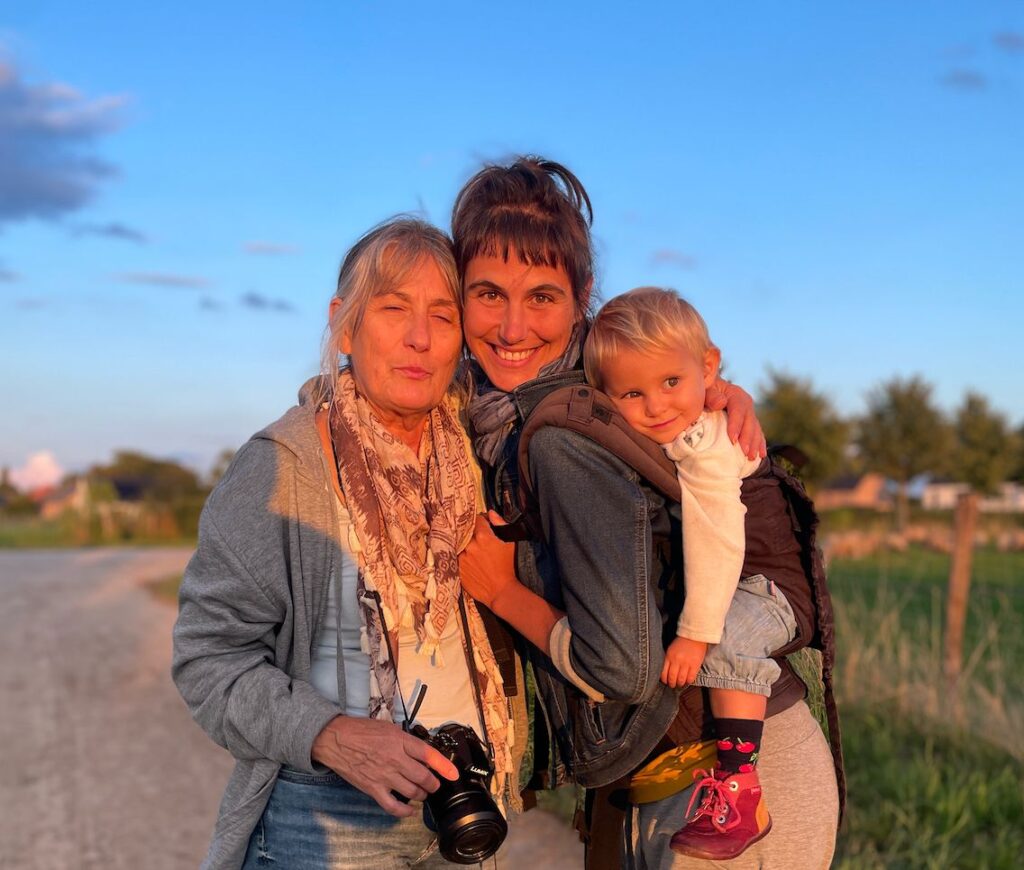
Education or conditioning? Breaking the cycle
As parents, we often follow the path we were taught. School teaches children to navigate the world: to plan, pursue goals, earn, and fit in. Naturally, we guide our children towards the same success, helping them develop skills, confidence, and competence.
But reflect for a moment on your own childhood: the more you tried to fit into expectations, to become the “perfect” version of yourself, the more you lost touch with who you truly were. Few notice this crucial link: the more disconnected we become from ourselves, the less energy, joy, curiosity, and aliveness we carry.
Skills alone are not enough. Before children can perform, follow rules, or conform, they need first to connect with who they are: to know their own presence, awareness, and capacity to live fully. If this foundation is neglected, their inner light, curiosity, and joy will diminish, along with the happiness, energy, and health we hope for them.
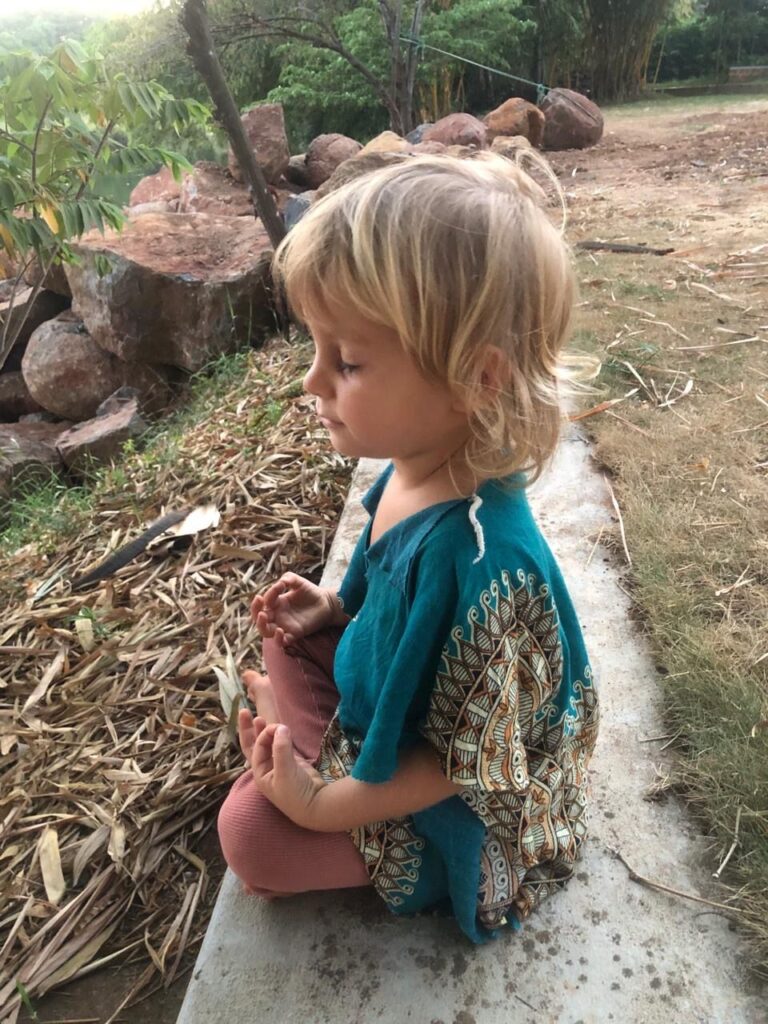
This is a simple truth: before we can act in the world, we first need to know we exist. Similarly, before children can function effectively, they need to know who they are. As parents, our primary role is to help them build this foundation of being. And the question naturally arises: how do we do this? Here lies the real secret…
The child already whole
A child, when born, is already complete. They are pure, spontaneous, and fully themselves, untouched by rules or expectations. In these first years, they are closest to their true essence: curiosity, presence, and joy.
While learning to function in society is necessary, it should never become the foundation of how they understand life. Functioning teaches skills; being is life itself, and that is already present in a child.
Children learn naturally by observing, exploring, and interacting. No one needs to teach them to walk, speak, or engage, they absorb and grow through their innate process.
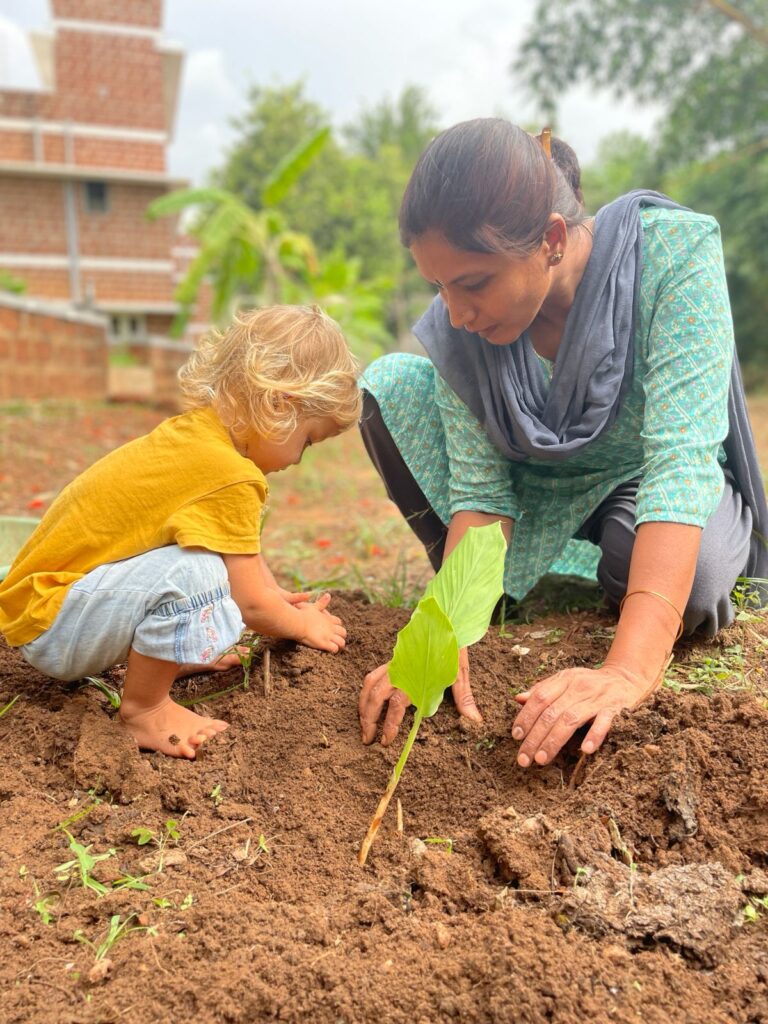
The longer this natural learning remains free from imposed influence, the more children build a foundation based on who they truly are. This foundation of awareness, joy, and authenticity guides them throughout life, reflected in their energy, resilience, and overall well-being. Life transforms from a heavy, rigid cycle into a virtuous loop: each experience enriches them, making them lighter and more joyful over time.
A parent’s task is to interfere as little as possible, preserving innocence while allowing natural exploration. By doing so, memory, understanding, and habits grow out of the child’s essence, rather than being dictated from outside.
The art of non-interference
Parenting becomes subtle here. Our role is to let the child be, allowing their essence to unfold, while also offering guidance when needed. It is not about doing nothing.
Sometimes firmness is needed, sometimes gentle guidance. Sometimes we step in, sometimes we step back. Intervention is necessary only when the child’s actions or external experiences threaten their inner light. Learning to discern when to act, and when to let go, is the true art of parenting.
There is no fixed formula. A child’s cries may need a response, or space. Sometimes we hold their hand, sometimes we let them lead. It is like trimming a tree to grow in harmony: not to control, but to support growth always playfully, while keeping their inner light intact.
A practical example: nurturing natural learning
Very often, we rush to explain and label everything a child encounters: “Look, a bird! This is a tree.” While well-intentioned, these words can overshadow the child’s direct sensory experience, the seeing, touching, hearing, and feeling that forms their first understanding of the world. When experience is filtered through concepts and definitions too early, the child’s natural, intuitive knowing is weakened. They begin to rely on external explanations rather than discovering things for themselves. This matters deeply because direct experience lays the foundation for independent learning, curiosity, and the connection to their own inner wisdom. You can read more scientific studies on this topic here.
Instead of unfolding naturally, learning becomes driven externally, rooted in functionality rather than being. Language is a tool for the world, not for discovering who they are. Forcing learning too soon reduces the energy, freedom, and inner light that support authentic growth.
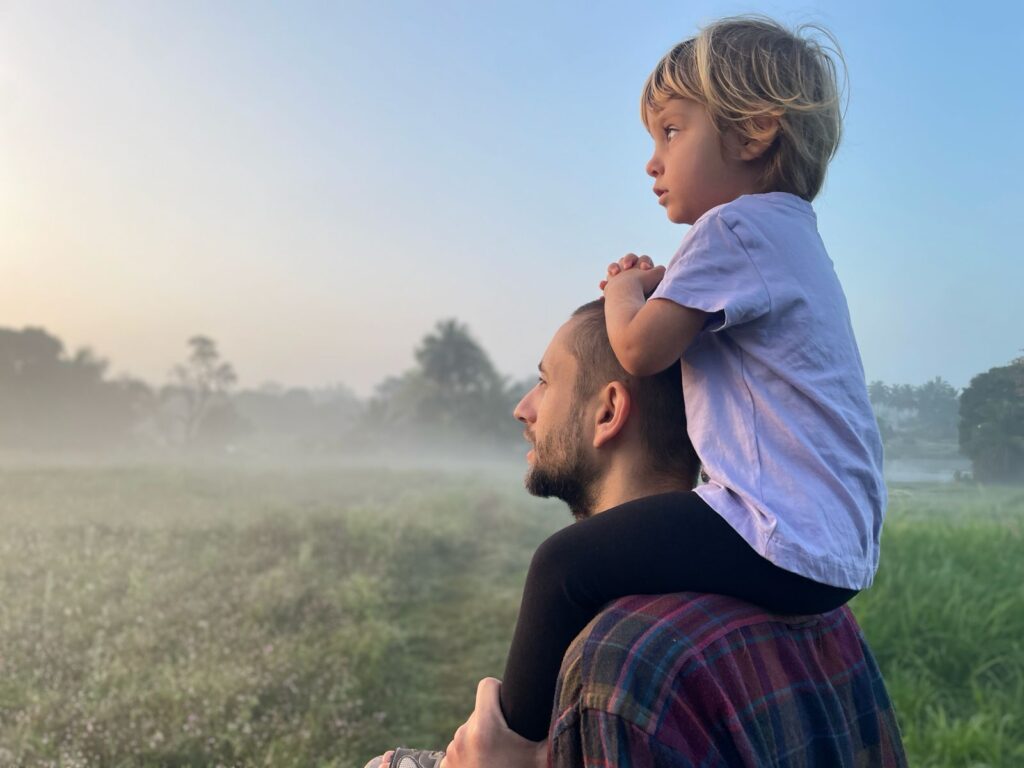
The subtle Imprints of parenting
Beyond individual lessons and daily interactions, parenting leaves subtle, lasting imprints on a child’s sense of Self. When we impose rules, labels, and expectations, how to behave, what to like, what not to like, before a child has discovered who they truly are, we shape their identity in ways they may not even notice.
In these formative years, children have little space to experience life directly. Instead of learning who they are through their own exploration, they start internalising the roles, judgments, and stories we place on them. These early imprints quietly guide how they see themselves and how they engage with the world.
Over time, these patterns accumulate. Children who were once free and radiant grow into adults confined by invisible boxes. They carry inherited expectations, repeat familiar patterns, and unconsciously pass them on to the next generation. The impact is both personal and societal, shaping the collective vitality, creativity, and authenticity of our communities.
Returning to the source
The true solution does not lie in new techniques or parenting philosophies. The solution begins within ourselves. Raising a conscious child is not about following instructions, it depends on seeing ourselves clearly. Only when we recognise our own conditioning and invisible boxes, can we stop unconsciously passing them on.
None of this comes from bad intentions. None of this arises from ill intent. Every parent wants the best and acts from love. Yet often, our actions are filtered through what we believe is “right,” what we were taught, or what we have yet to question. Without awareness, we continue shaping a world of subtle confinement, because we ourselves are still confined.
True Education: nurturing essence, not conformity
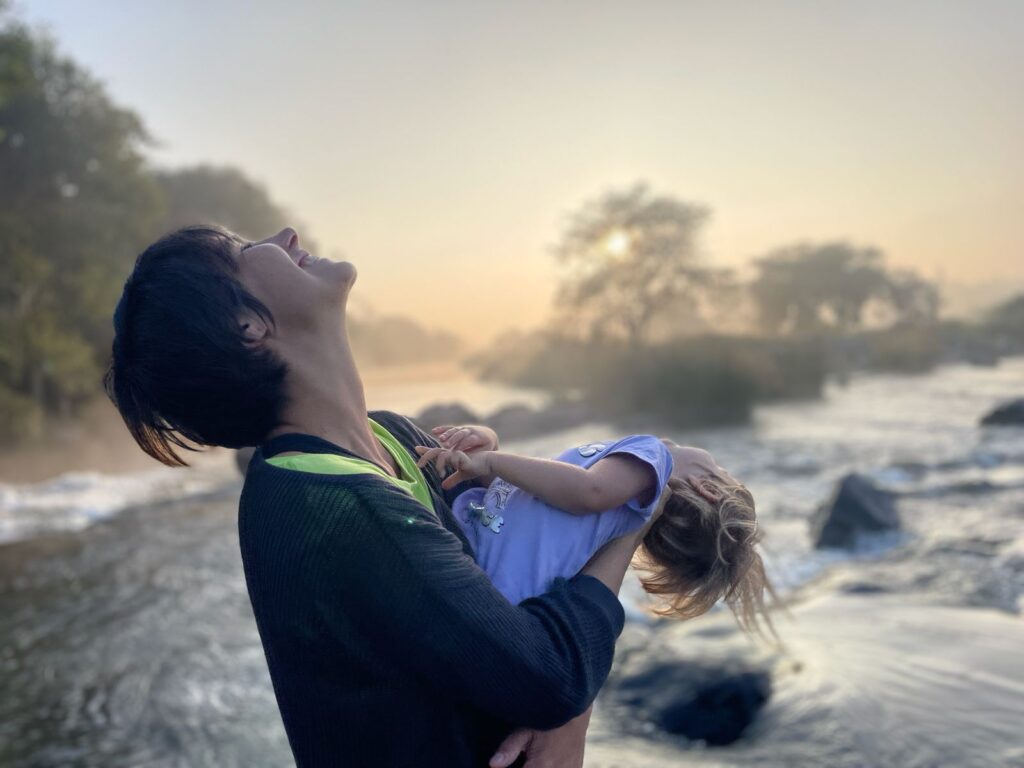
To guide children towards their inner essence, we must first return to the source within ourselves. Each of us carries a conditioned adult shaped by family, society, and efforts to “fit in.” Transcending this allows the innate joy, energy, curiosity, and spontaneity to flourish.
True education begins here: nurturing what is already present. It is creating space for life to unfold naturally, for presence to be experienced, and for the innate wisdom of a child to remain untouched. By nurturing essence rather than imposing conformity, we preserve liveliness, energy, and inner light, the foundation for walking through life with ease, joy, and authenticity.
About the author

I never planned to be a mother. For a long time, I felt something inside me was not ready to guide a soul in this world. Then I met a true guide, someone who could illuminate life for me: Vijay Gopala, Yoga teacher & realised soul, from Mysore, India. My partner and I decided to follow his teachings, and over time, there came a moment when I felt ready to welcome a life, to guide a soul towards freedom.
Since 2017, I have been deeply engaged in his teachings, participating in Yoga Teacher Training Programmes, several Yoga Gita Retreats and events, and studying Indian philosophy while exploring and understanding myself. In 2021, my daughter Luz was born. She has become my practice, my love, and my life. True parenting reveals its beauty when approached with awareness and guidance, benefiting both parent and child.
Thank you, Vijay, for all your support.


3 thoughts on “Parenting as True Education: Nurturing Essence”
❤️🧡💜🩷☀️💛
Merci Emy de partager toutes tes réflexions passionnantes et très éclairées. Félicitations pour ton magnifique parcours et votre cheminement à tous les 3. C’est Un plaisir de suivre votre parcours. Avec toute mon amitié
Plaisir partage Catherine… merci beaucoup pour ton jolie message et ton soutien permanent… Bisous