
By Remco, The Netherlands
Table of Contents
Introduction
Have you ever noticed how easily your happiness becomes tied to what happens around you? A compliment lifts your mood, criticism disturbs you, success excites you, and disappointment leaves you feeling empty. Without realising it, we become attached to experiences that are constantly changing.
Yoga offers another way. Instead of seeking lasting fulfilment in changing experiences, it invites us to discover an inner freedom that remains, whatever life brings. True freedom lies not in changing our circumstances, but in freeing ourselves from dependence on them.
This is the essence of Vairagya: participating fully in life without becoming inwardly bound by its changing circumstances.
What is Vairagya?
Vairagya is often translated as non-attachment. It grows from recognising that experiences, possessions, roles, and identities constantly change, while our true nature remains unchanged.
Vairagya is often misunderstood as withdrawal from life. In Yoga, it means something very different. Imagine enjoying your work without your happiness depending on success, loving someone deeply without fearing loss, or giving your best while remaining inwardly free whatever the outcome.
Rather than resisting life, Vairagya invites us to meet it with openness and understanding. As happiness becomes less dependent on outcomes, our actions become more natural, relationships less possessive, and even difficult situations lose much of their power over us.
We are not withdrawing from life; we are learning to engage with it in greater freedom.
Awareness: where Vairagya begins
Most attachments begin unnoticed. A pleasant experience awakens the wish for more, while an unpleasant one creates resistance. Praise encourages us to seek approval, criticism triggers defensiveness, and success easily becomes something we want to repeat. These reactions arise so quickly that they often feel automatic.
The first step towards Vairagya is simply recognising this movement. When attraction or resistance appears, we pause and observe it instead of immediately following it. That brief moment of seeing creates space for a different response.
As our understanding deepens, we discover that attachment is something we experience rather than something we are. Thoughts, emotions, and desires still arise, but they no longer have to determine our inner state. Instead of being carried away by every impulse, we begin to relate to experience with greater freedom.
Vairagya is not something we impose upon ourselves through discipline or suppression. It develops through understanding. As we recognise the changing nature of every experience, attachment gradually loses its hold. From this insight, Patanjali introduces Vairagya as one of the essential foundations of Yoga.
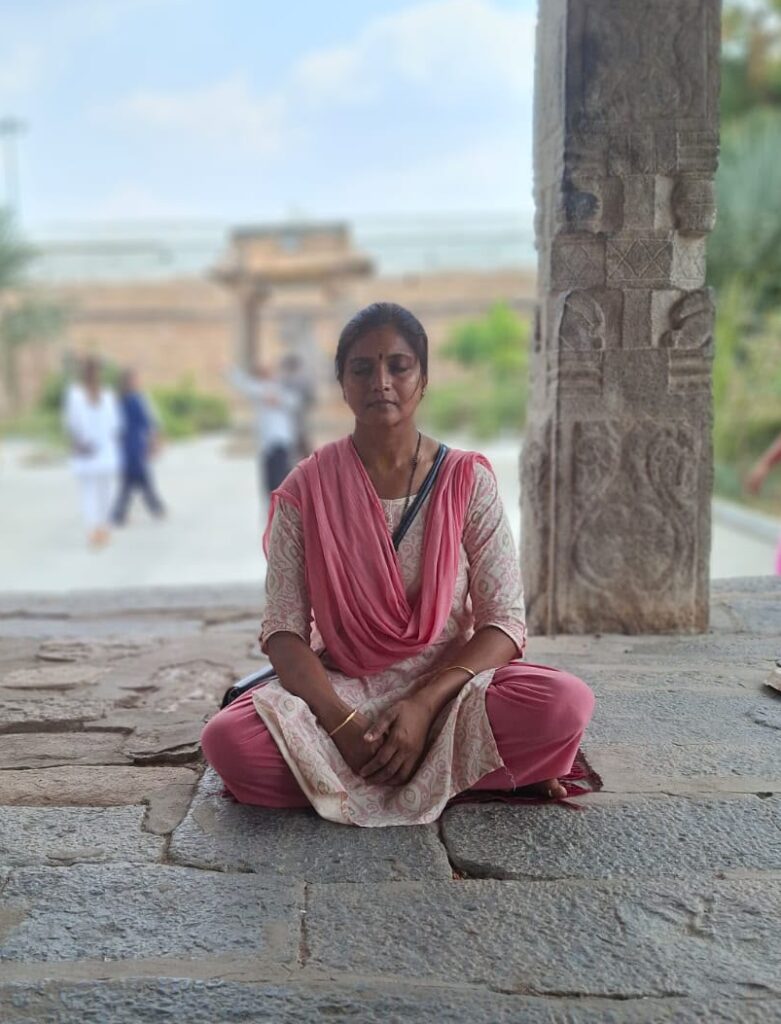
Meditation in the temple garden of the ancient Brahmapureeswarar Temple in Tamil Nadu
Vairagya in the Yoga Sutras
Patanjali introduces Vairagya together with Abhyasa (steady practice) in the sutra abhyāsa-vairāgyābhyām tan-nirodhah (I.12), showing that practice and non-attachment develop side by side. Together they quieten the fluctuations of the mind.
Abhyasa cultivates inner stability, while Vairagya frees us from attachment to experiences, thoughts, and outcomes. One develops steadiness; the other prevents that steadiness from becoming rigid. Together, they form the foundation of Yoga.
As practice and non-attachment mature, the mind becomes quieter. When its fluctuations settle, we begin to recognise the stillness that has always been present beneath them.
The nature of life
As the mind becomes quieter, we begin to see life more clearly. Change is inevitable, uncertainty unavoidable, and every experience is part of a larger unfolding.
We naturally hold on to what is pleasant and resist what is not. We wish joyful moments would last and difficult moments would pass quickly. Yet the more deeply we understand life, the more we recognise that change is woven into every experience. Rather than discouraging us, this insight helps us let go of expectations that life can provide lasting certainty.
Seeing this changes the way we relate to experience. Instead of clinging to what inevitably changes, we learn to appreciate each moment without depending on it for our happiness. This is not indifference, but a more harmonious and free way of participating in life.
Living with more clarity
Vairagya becomes evident in the way we respond to everyday experiences. Think of receiving criticism. The mind may immediately defend itself, feel hurt, or replay the words long after the conversation has ended. A brief exchange can affect the rest of the day, even after the other person has moved on.
As Vairagya deepens, we are no longer carried away by every reaction. Success and disappointment, praise and criticism, pleasure and discomfort still arise, but they no longer determine our inner state. We become less reactive and more responsive, meeting life with greater clarity.
Patanjali describes this in Sutra I.15 as freedom from craving towards what is perceived (drṣṭānuśravika-viṣaya-vitṛṣṇasya vaśīkāra-saṃjñā vairāgyam). This is not a rejection of experience, but freedom from being bound by it.
As perception becomes clearer, we begin to see beyond the influence of personal preference, fear, and expectation. Outwardly, little changes. We continue to participate fully in life, but inwardly become increasingly aligned with reality.
Freedom from psychological dependence
As our understanding deepens, so does our relationship with desire. We continue to have goals, responsibilities, and practical needs, yet they no longer determine our inner well-being. We still enjoy, create, love, and contribute, but our happiness is no longer dependent on achieving, possessing, or holding on to them.
Instead of looking to people, possessions, or circumstances for lasting fulfillment, we begin to discover an inner contentment. This does not make life less meaningful. Rather, it allows us to appreciate each experience more fully because we no longer depend on it to complete us.
This is the freedom that Vairagya brings. It is not the absence of desire, but freedom from psychological dependence. Our actions arise from clarity rather than compulsion, allowing us to participate wholeheartedly in life without becoming inwardly bound by its changing circumstances.
Living with inner freedom
Vairagya is an essential part of the path of Yoga. Yoga is not merely a physical practice but a way of moving beyond the limitations of the mind and ego. Inner freedom is the natural expression of Yoga.
Rather than being driven by habit or emotional reaction, we become more able to respond with clarity. Vairagya does not remove responsibility; it transforms how we meet it. Our actions begin to reflect what each situation calls for, not what fear, desire, or the need for recognition demands.
As attachment loosens, energy once consumed by resistance, worry, and comparison becomes available for living more consciously. Instead of trying to make life conform to our expectations, we learn to cooperate with its natural flow.
This does not mean passive acceptance. It means meeting each situation with clarity and care while allowing our well-being to remain independent of the outcome.
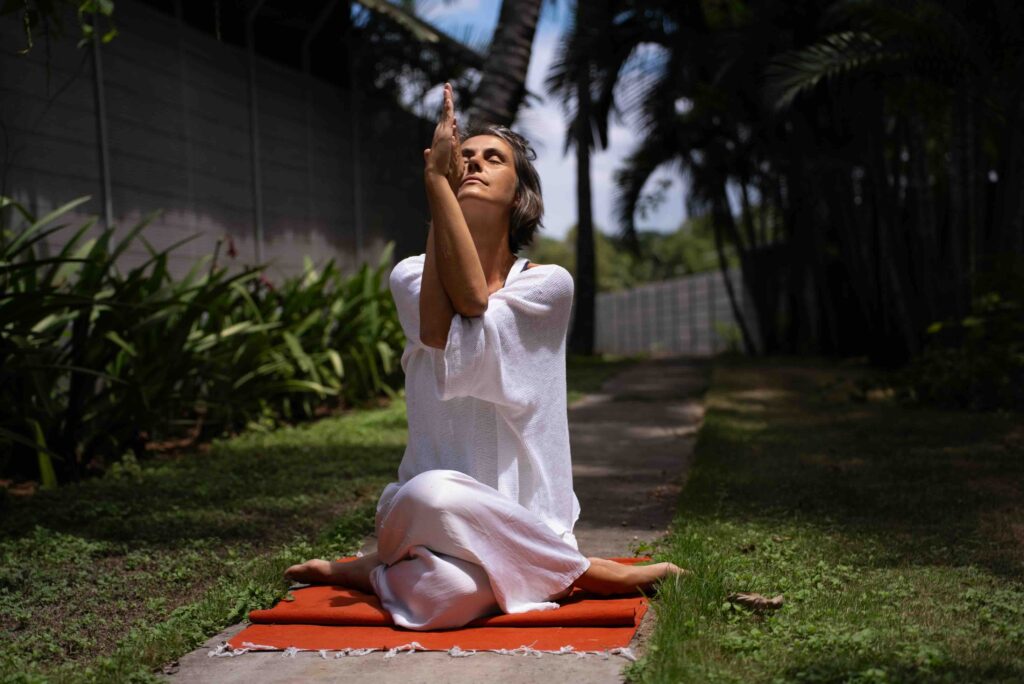
Practising Gomukhasana in the garden of the Yoga Gita Ashram
How Vairagya changes daily life
The effects of Vairagya appear in everyday life. Situations that once disturbed us still arise, but no longer affect us in the same way. Relationships become less possessive, achievements less defining, and disappointments less overwhelming.
We appreciate each experience without needing to hold on to it, allowing every moment to arise and pass. This brings greater balance and openness to daily life.
Life becomes simpler, not because circumstances become easier, but because the inner struggle gradually diminishes. We begin to meet ordinary situations with less resistance and greater ease.
When Vairagya becomes natural
Eventually, Vairagya is no longer something we practise; it becomes the way we live. Ordinary moments – a conversation, a setback, an unexpected change – become opportunities to meet life with understanding and openness. Because we no longer expect life to conform to our preferences, we respond with greater compassion, trust, and inner freedom.
In daily life, we become less concerned with controlling outcomes and more available to what each moment offers. Rather than constantly pursuing or avoiding experience, we discover what it means to live in harmony with life.
As this understanding matures, it touches something even more fundamental: our fear of loss and change. Even the fear of death (abhinivesha) can gradually lose some of its hold as we become less dependent on what is changing. We become more available to life itself, discovering a quiet courage that depends not on certainty, but trust in life as it unfolds.
Conclusion
We gradually come to recognise life more clearly. Change is inevitable, and life unfolds beyond our personal preferences. Rather than resisting the changing nature of life, we learn to live in harmony with it.
Vairagya is the freedom to participate wholeheartedly in life without becoming inwardly bound by its changing circumstances. In that harmony, a freedom emerges that does not depend on outcomes, but remains present through every experience.
Further reading
About the author
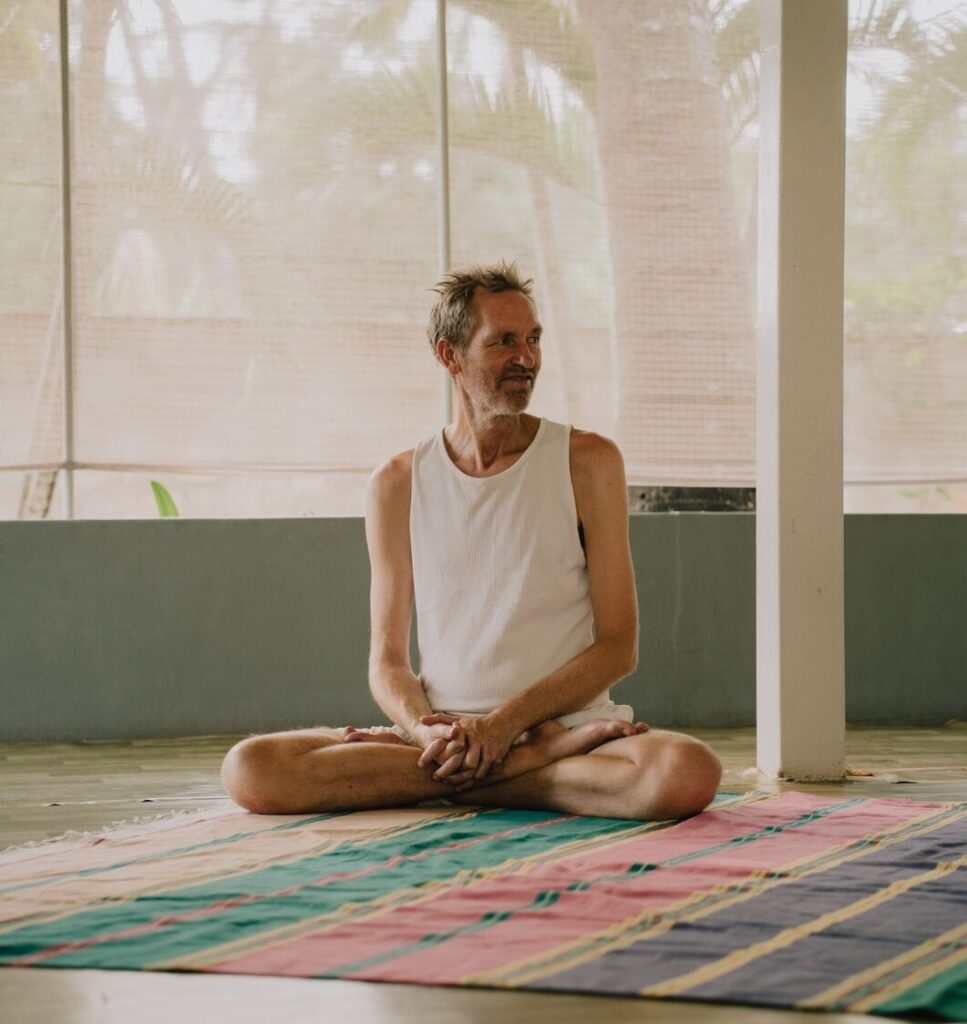
Remco in the Yoga Gita Ashram, near Mysore
Remco de Groot has been exploring many dimensions of Yoga and traditional Indian philosophy for over 30 years, seeing that Yoga practice and its philosophical foundation are inseparable. Yoga is a way of living that dissolves the boundaries between oneself and Life, allowing authentic Self-expression to flow with ease.
In recent years, Remco has been living in Mysore, India, with his wife Martine and daughter Anna, as part of Yoga Gita’s global community dedicated to Conscious living. Guided by ViGo, their family is volunteering together with other Yoga Gita Sadhakas, supporting participants of the ashram programmes in discovering holistic well-being through the integrated wisdom of Yoga.
To learn more about Yoga Gita Ashram, visit the website, or connect on Facebook, Instagram, and YouTube.


